Knees over toes in a squat: is it really bad for you?
Told your knees must never pass your toes in a squat? Blocking them just moves the work to your hips and back. Here's a better way to squat.
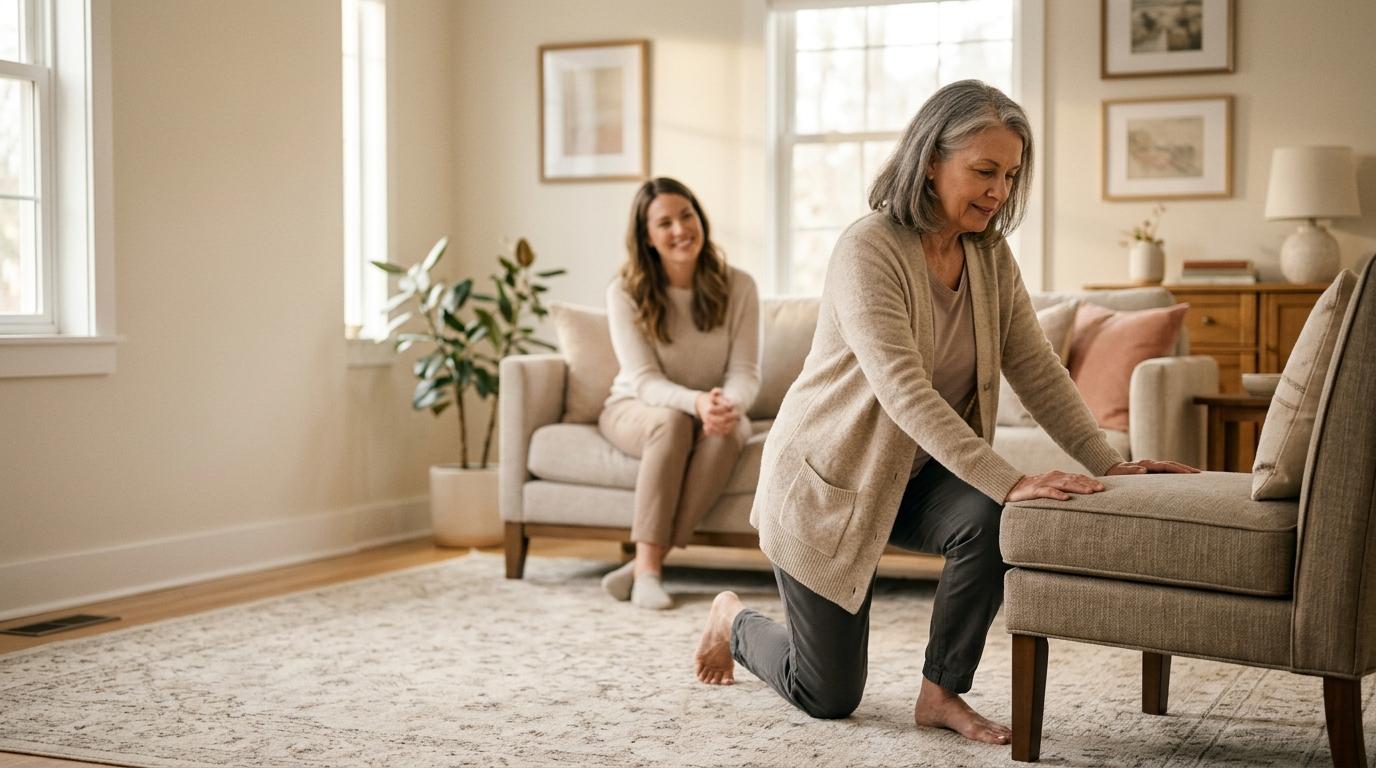
Stand up and do one slow squat, the way you'd lower yourself onto a low sofa. Somewhere in your head, a voice probably piped up: "Don't let your knees go past your toes."
Who told you that? A PE teacher, a poster in a gym changing room, a friend who once read a magazine? Most of us can't remember. We just know it, the way we know plenty of things nobody ever bothered to check. Someone did check this one, and the rule doesn't come out of it well.
Blocking your knees just moves the work somewhere else
In 2003, researchers in Memphis filmed seven men squatting two ways, each with a barbell as heavy as they were. The first time, they squatted however felt natural. The second time, a wooden board stood in front of their knees so they couldn't drift past their toes. Then the team worked out how hard the knees and hips had to work at the bottom.
With the board in place, the knees did get off lighter, by about a fifth. But the work didn't disappear. In the normal squat, the knees did most of it and the hips barely joined in. With the knees blocked, the hips took over and did about ten times more than before. The men also tipped further forward to keep their balance.
The researchers put it politely: stopping the knees probably shoves the load onto the hips and lower back, and a good squat may need the knees to go slightly past the toes. So the old rule doesn't really protect anything. It just passes the bill along.
Your shins and your back are a team
Walk down a steep flight of stairs, or crouch to tie a small child's shoe, and your knees go over your toes. Nobody files a complaint.
A review written for physios explains the trade in plain mechanics. Let your shins lean forward and the muscles at the front of your thighs do more. Lean your chest forward and your hips and bottom do more. Both have their uses, and the review's idea of a balanced squat is refreshingly simple: your shins and your back lean forward by about the same amount.
That's what the old rule misses. Keep your shins upright and the only way to stay balanced is to fold your chest forward, which is just what the men behind the board ended up doing.
And if you've also been told that going low wears your knees out, a review of more than 160 papers looked at exactly that and called the worry "unfounded". It also points out that cartilage, ligaments and bone adapt when you use them, which is lovely news for the joints you've been tiptoeing around. The authors attach one sensible condition: learn the technique properly and build up gradually.
Nobody showed you a squat, so you guessed
Think back to how you learned to squat. You didn't. Nobody ever stood next to you and showed you. You got one line, "knees behind toes", handed down like a family recipe nobody ever tasted. So you did what any sensible person does with half the instructions: you guessed. You leaned forward a lot, felt it in your lower back, and decided squats just weren't your thing.
That says plenty about the teaching. It says nothing about you.
It's also a move worth having for the long run. When a team in Japan compared people in their 70s with people around 30 doing a deep squat, the older group couldn't get as low. They bent less at the ankles and knees, leaned their chests further forward and relied more on their hips. The researchers call the deep squat one of the most important movements for living independently. Their study was small and looked at two groups at a single moment, so it can't tell us whether practice would change any of that. What it does show is what a squat is really for: getting down low and back up again, at 30 and at 76.
When leaning back is the right call
To be fair to the poster, the board study had seven young men who already lifted weights. It measured how hard their joints worked, not whether anyone got hurt. That's a strong clue, not the final word.
And knees-forward isn't the answer for everyone on every day. For people with sore kneecaps, the same physio review suggests starting with a hips-back squat and moving towards a more knees-forward one as things settle. If your knees hurt when you squat, ask a physio before you change anything.
How to try a knees-forward squat today
Stand with your feet about hip-width apart and your toes turned out a little. Keep a chair or the kitchen counter in reach in case you want to hold on.
- Bend your knees and hips at the same time, as if you're sitting down onto something low, and let your knees travel forward over your toes.
- Keep your whole foot on the floor, heels too, and point your knees the same way as your toes.
- Check yourself side-on in a mirror, or in the oven door. Your shins and your back should lean forward by about the same amount.
- Go as low as feels comfortable, then stand back up. Five slow ones are plenty to start.
If your heels lift or you topple forward before you get very low, slide a thick book or a folded towel under your heels. Raising the heels lets your shins lean forward without asking more of your ankles, and a review of squat footwear found that lifting the heels, with weightlifting shoes or a wedge, cut how far people leaned their chests forward. Those studies were mostly on people already squatting with weights, but a towel costs nothing to try.
Two squats before the kettle boils is a perfectly respectable start.
A teacher, at last
Nobody taught you a squat, so you got a poster instead. Hoppa shows you the move, tells you what to fix, and lets you know when you're doing it right.
Hop in.
Sources
- Fry, Smith, Schilling (2003). Effect of knee position on hip and knee torques during the barbell squat. J Strength Cond Res
- Straub, Powers (2024). A biomechanical review of the squat exercise: implications for clinical practice. Int J Sports Phys Ther
- Hartmann, Wirth, Klusemann (2013). Analysis of the load on the knee joint and vertebral column with changes in squatting depth and weight load. Sports Med
- Honda et al. (2022). Effects of aging on whole-body center of mass movement and lower limb joint kinematics and kinetics during deep-squat movement. J Biomech
- Pangan, Leineweber (2021). Footwear and elevated heel influence on barbell back squat: a review. J Biomech Eng